

Consumers have become incredibly fluent in flavor. They can tell when a “smoky” profile feels authentic versus flat, when “spicy” is one-note heat instead of a layered burn-and-warmth, and when a “fresh herb” claim tastes more like dried, dusty greenery than something bright and alive.
That’s why understanding flavor compounds has become essential. Flavor is the result of hundreds (sometimes thousands) of naturally occurring chemicals working together — some driving what we perceive as taste (sweet, salty, sour, bitter, umami), others building aroma (the top notes that pop instantly and the base notes that hang around), and still others shaping mouthfeel (warming, cooling, astringent, coating, crisp, creamy, and more). When you know how these compounds behave, you can design seasonings that perform consistently across real products.
What Are Flavor Compounds?
Flavor compounds are the naturally occurring (and sometimes reaction-created) chemicals that contribute to the sensory experience of food. They’re present in spices and herbs, fruits and vegetables, and many other natural ingredients. They’re also produced during cooking reactions — like browning, roasting, or toasting — when heat transforms raw components into deeper, more complex flavor structures.
In spices and herbs, these compounds often live in essential oils and other aromatic fractions. In cooking, they can be generated through processes like caramelization and other heat-driven reactions that create savory depth and roasted character. The important thing is this: compounds don’t behave the same way in every format.
A seasoning designed for a dry rub needs to handle time and heat. A seasoning for snacks needs rapid aroma pop, strong adhesion, and flavor release in a low-moisture environment. A breading has to stand up to frying and still read clearly through oil and crunch. Sauces and marinades introduce water, acidity, and sometimes sugar, each changing how compounds dissolve, release, and linger.
That’s why flavor compounds matter so much: they determine whether a seasoning stays bright or fades, whether it tastes balanced or sharp, and whether it delivers a satisfying arc from the first bite to the last.
How Spice Compounds Shape Taste
Taste is what happens on the tongue — those five core categories: sweet, salty, sour, bitter, and umami. Spices don’t always “contain” these tastes in the same way a sugar or a salt does, but spice compounds can influence taste in powerful ways:
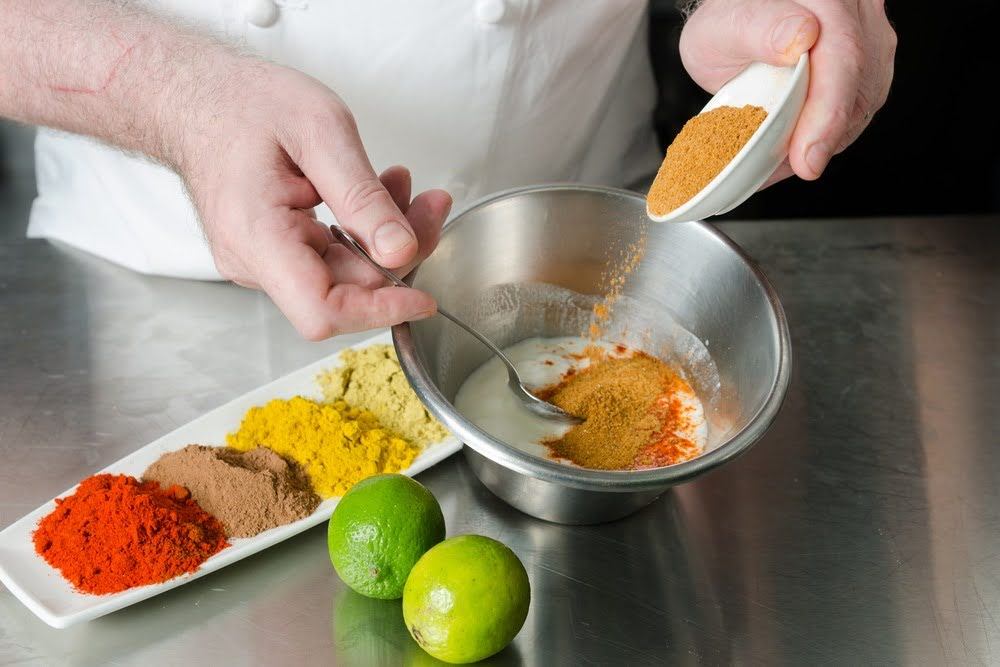
- Sweetness and Roundness: Certain spice notes suggest sweetness even without sugar. For example, warm spices often create a sense of softness and comfort that makes blends feel fuller and more rounded.
- Bitterness and Complexity: Some botanical compounds naturally contribute bitterness. Used intentionally, they can add sophistication and balance richness. Overdone, they can read harsh or medicinal.
- Umami Support: While spices aren’t typically umami ingredients on their own, they can amplify savoriness, especially when paired with roasted, toasted, or browned notes.
- Salt Perception: Many flavor compounds shift how salt is perceived, making a seasoning feel more “seasoned” even when sodium isn’t simply increased. This is often about contrast, aroma lift, and how flavors bloom across the palate.
- Umami & Functional Flavor Systems: Not all umami comes from obvious sources like tomato, cheese, or mushroom. In modern seasoning systems, it’s often built through naturally derived compounds labeled as “natural flavors,” which can function similarly to MSG—enhancing depth, roundness, and overall savoriness.
- Wet and dry reaction flavors (such as roasted meat, anchovy, olive, or broth-style notes) further build layered umami that feels cooked-in rather than added-on, helping create a more integrated and authentic flavor experience.
- Kokumi & Perceived Richness: If umami builds savoriness, kokumi builds structure—extending and connecting flavor so it feels full from first bite through finish.
- Kokumi compounds don’t have a distinct taste but enhance richness, continuity, and mouth-coating depth, helping flavors feel more complete and preventing drop-off after the initial bite.
- Often developed through yeast extracts, fermented ingredients, and reaction flavors, kokumi is especially valuable in reduced-sodium, plant-based, or better-for-you formulations—delivering fullness without adding more salt, sugar, or fat.
In other words, spice compounds don’t just add taste; they help shape taste architecture, building contrast and cohesion so the profile feels intentional rather than noisy.
A Spice’s Impact on Aroma
Much of what people call “taste” is actually smell, especially retronasal aroma, the scent that travels from the mouth up into the nasal cavity as you chew and exhale.
Spices are rich in aromatic compounds that can create:
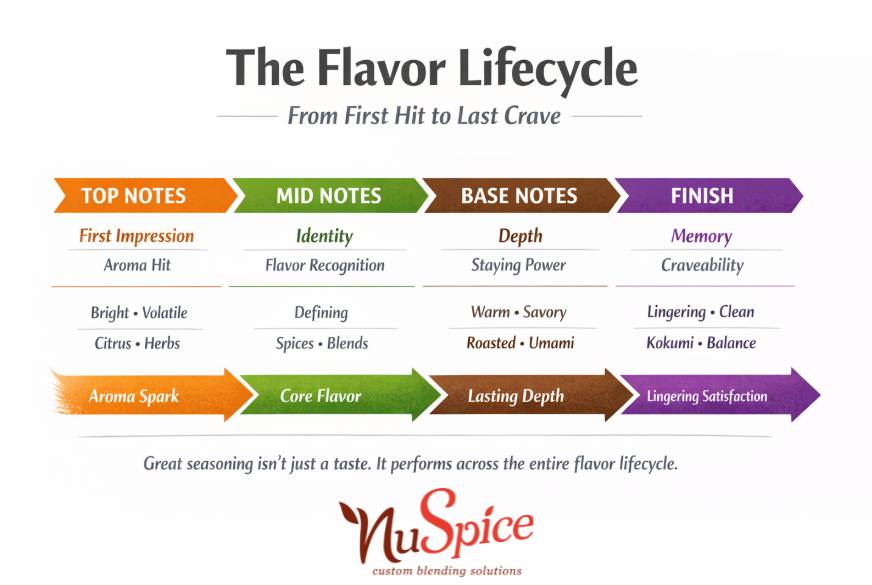
- Bright top notes that hit quickly (such as citrusy, herbal, floral, fresh, or sharp notes).
- Mid notes that define identity (think “this is definitely cumin” or “this reads like a classic barbecue profile”).
- Base notes that linger (for example, smoky, woody, resinous, earthy, roasted, warm, or sweet-brown flavors)
A well-designed seasoning doesn’t rely on one loud aromatic note. It creates a sensory storyline: an inviting first impression, a clear character at the center, and a satisfying, craveable finish that stays present without turning heavy.
The Science of Spice & Mouthfeel
Mouthfeel is where spice becomes truly multi-dimensional. Some compounds interact with receptors in ways that create physical sensations such as:
- Warmth and Heat: That slow-building glow or sharp punch that can feel bright, deep, or lingering depending on the compound mix.
- Cooling: A clean, refreshing sensation that can brighten rich foods or create contrast in bold profiles.
- Astringency: That drying or puckering effect — useful for cutting through fat, but unpleasant if it overwhelms.
- Coating and Fullness: A sensation of body or cling that makes flavors feel more indulgent and long-lasting.
- Crisp vs. Creamy: Even texture-adjacent cues can be influenced by how compounds release with crunch, oil, or moisture.
- Kokumi & Continuity: A sense of mouth-coating richness and connection that helps flavors feel more complete, smoothing transitions from first bite through finish.
Mouthfeel is a major reason two seasonings with similar “ingredients” can feel completely different. One may hit as bold and warm, while another may feel sharp, dry, or fleeting. Understanding the science of spice compounds helps you design the perfect experience for consumers.
Key Ways Flavor Compounds Influence Seasoning Performance
Top Notes vs. Base Notes
Top notes are what you smell when the bag opens or what hits as the food approaches the mouth. They’re often volatile and fast, which makes them exciting… and also easier to lose during processing or high heat.
Base notes are slower-building, lingering notes that give a seasoning its staying power. They’re what make a profile feel complete and satisfying through the chew and into the finish.
Smart seasoning design balances both, creating a flavor arc that feels intentional. When the arc is missing, profiles can feel hollow (all top, no base) or heavy (all base, no lift).
Flavor Release & Fat/Heat Interaction
Flavor compounds don’t “show up” the same way in every food system. Fat, temperature, and cooking method can dramatically change release and intensity.
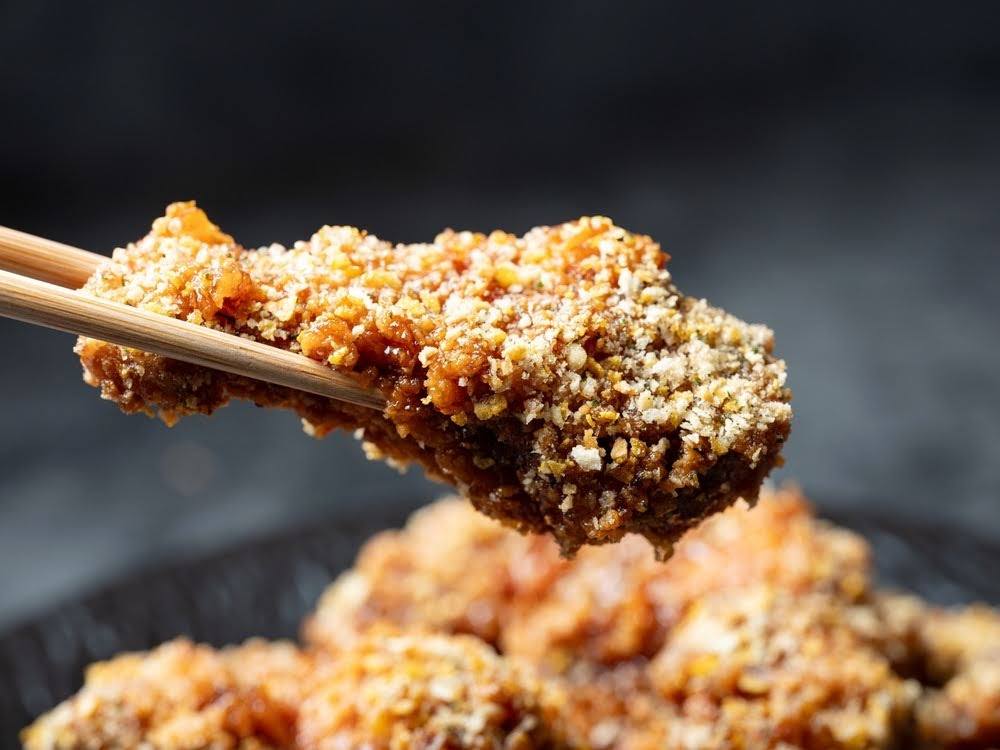
That’s why a blend might taste:
- Louder on fried foods, where fat carries aromatic compounds and heat drives release.
- More muted on lean proteins, where there’s less fat to transport aroma and less surface oil to bloom flavor.
- Different across bake, fry, grill, or air-fry, because heat curves, moisture loss, and browning vary.
Seasoning development has to anticipate these shifts. The goal is consistent sensory performance: bold where it should be bold, balanced where it should be balanced, and recognizable no matter the application.
Perceived Intensity & Balance
One of the biggest misconceptions in flavor work is that intensity is simply a volume knob: “If it’s not strong enough, add more.” In reality, spice compounds can amplify or soften one another, changing how intense a seasoning feels without dramatically changing usage rate.
The right compound relationships can:
- Make a profile feel fuller and more present.
- Reduce sharpness or “spiky” notes.
- Prevent hollow, one-dimensional flavor.
- Improve harmony so bold flavors stay enjoyable.
This is how you avoid seasonings that taste aggressive at first bite but don’t have a satisfying middle — or blends that are powerful yet somehow still feel empty.
Finish & Aftertaste
The final moments matter more than many teams expect. Consumers remember the finish: does it stay clean and craveable, or does it linger in a way that feels heavy, bitter, or cloying?
A clean finish often comes from smart balance — enough base notes to satisfy, enough lift to keep it bright, and enough structure so nothing sticks out in the wrong way after the swallow.
When the right combination of compounds is dialed in, the finish becomes a feature: it leaves consumers wanting the next bite, not reaching for a reset.
Embrace the Power of Spice Compounds
Flavor compounds are where seasoning blends move from “tasty” to memorable. They’re the reason a profile can feel bright and true from open to finish, why heat can feel dimensional instead of blunt, and how mouthfeel can turn a good snack into a “just one more” experience.
You see this play out in real products every day. A snack seasoning that delivers an instant aroma hit but still lingers through the crunch. A plant-based protein that feels rich and satisfying without relying on added fat. A reduced-sodium sauce that still tastes fully seasoned, not like something’s missing.
This is the difference between flavor that shows up—and flavor that performs.
NuSpice partners with brands to create bold, balanced spice blends that intentionally shape taste, aroma, and mouthfeel. The result is a product that delivers a more vivid sensory experience and stands out in crowded categories.
If you’re exploring new seasoning concepts or looking to refine an existing profile for stronger real-world performance, reach out to our specialists to start the conversation.