
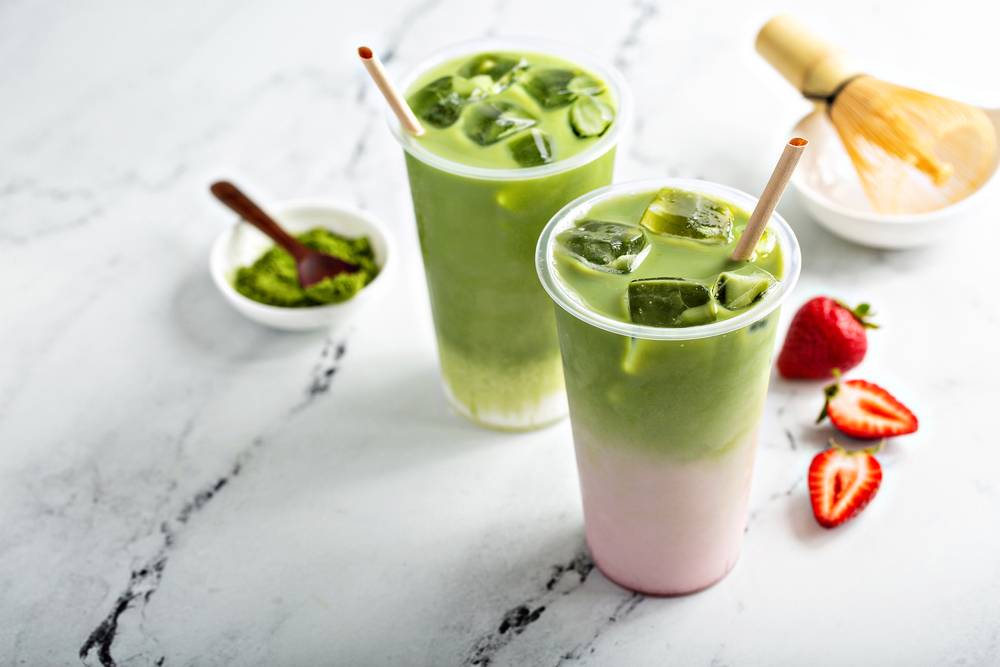
From Ritual to Routine: How Matcha Entered the Market
Matcha didn’t arrive in the U.S. overnight — and it didn’t arrive the way it exists today.
Its early presence was rooted in tradition and ceremony, largely limited to specialty tea shops and a niche consumer who understood what they were drinking. As it moved into cafés and eventually QSR, matcha had to become more approachable. That’s when we saw the first layer of evolution: sweetened matcha lattes, vanilla-forward profiles, and dairy-heavy builds that softened its natural bitterness and broadened its appeal.
That phase worked. It drove trial and built familiarity.
But it also flattened what made matcha interesting in the first place.
What’s happening now is the next step in that evolution. Instead of continuing to mask matcha’s more complex characteristics, operators are building around them — and pairing them with flavors that create balance rather than cover.
What’s happening here isn’t just the rise of another flavor combination — it’s a shift in how flavor is being built.
Strawberry matcha isn’t the peak of a trend. It’s an early example of a more structured approach to flavor, where balance, contrast, and function are intentionally designed into the experience.
From Sweetened to Structured: The Shift Toward Pairing
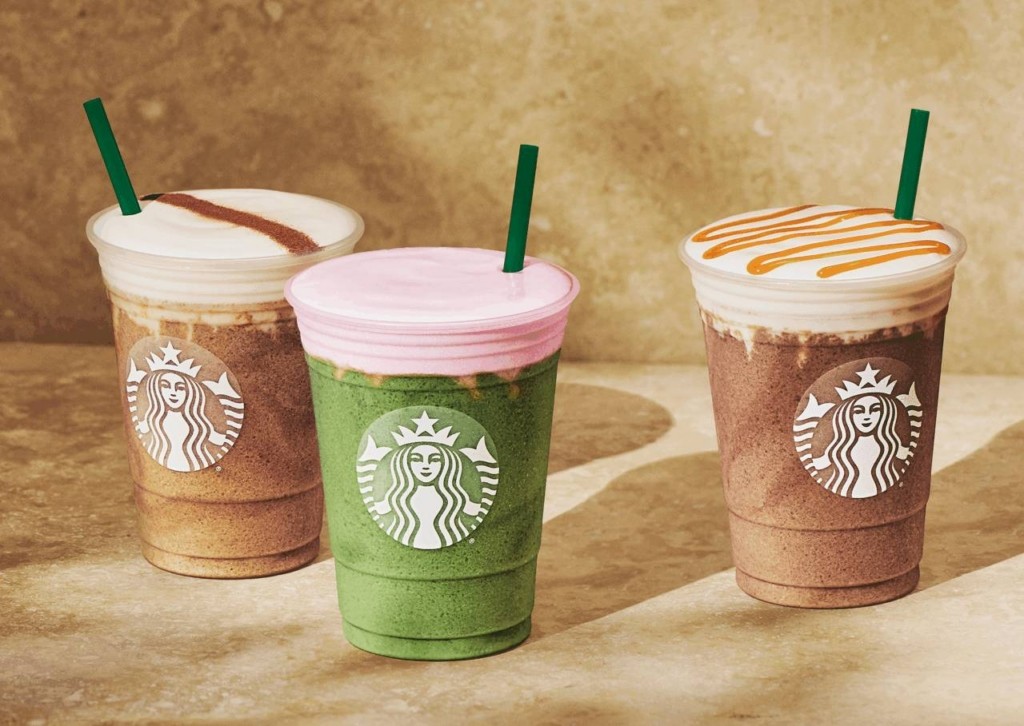
You can see that shift most clearly with the emergence of fruit-forward matcha — and more specifically, strawberry.
Operators like Starbucks have leaned into this with drinks that layer strawberry purée with matcha and cream-based foams, creating both visual impact and flavor balance. At the same time, matcha-focused concepts like Junbi have built strawberry matcha directly into their core menu, not as a seasonal item, but as a foundational offering. Even Asian bakery chains like 85°C have formalized the pairing into scalable beverages designed for consistency across locations.
When you see that level of alignment across global QSR, specialty matcha chains, and international bakery cafés, it’s no longer experimentation.
It’s direction.
The Rise of Strawberry as a Strategic Flavor
Strawberry isn’t new — but its role is.
Historically, it’s been used as a standalone flavor or paired with indulgent formats like cream, chocolate, or bakery. What’s different now is how it’s being positioned.
Strawberry is becoming a functional bridge.
It’s showing up in systems designed to introduce more complex or less familiar flavors to a broader audience. In the case of matcha, that role is especially clear. It provides an immediate entry point — something recognizable that makes the overall experience feel approachable, even when the base is more complex.
That’s not accidental — it’s strategic.
Why Strawberry and Matcha Work (From a Flavor Science Perspective)
From a formulation standpoint, this pairing is highly functional.
Matcha brings bitterness, umami, and a vegetal profile driven by compounds like catechins and chlorophyll. Those elements can read as astringent or grassy without proper balance.
Strawberry offsets that in multiple ways:
- Natural sugars help suppress perceived bitterness and soften astringency
- Citric and malic acids introduce brightness, lifting heavier, earthy notes
- Volatile aromatics deliver a high-impact top note that creates lift and immediacy
What you get is a structured system:
- a grounding, earthy base
- a bright, familiar top note
- and a built-in sweet-acid balance that keeps the flavor dynamic
It’s not just contrast — it’s control over how the flavor is experienced from first impact through finish.
Why It’s Resonating Now
What’s driving this isn’t just curiosity — it’s a broader shift in how consumers are making decisions.
Increasingly, people are navigating a set of competing priorities. They want indulgence, but they also want control. They’re more cost-aware, but less willing to compromise on experience. They’re looking for something that feels both satisfying and considered.
Strawberry matcha works because it resolves that tension without forcing a tradeoff.
It delivers sweetness without heaviness and function without feeling medicinal.
It introduces complexity but anchors it in something recognizable.
That balance is what’s resonating.
From Drink to Platform: Where It’s Going
What started as a layered beverage didn’t stay there for long.
Now you’re seeing this pairing move into smoothies, bakery applications, dessert systems, and more functional formats that lean into wellness positioning. That kind of movement only happens when a flavor system proves it can flex.
Because that’s what this really is.
Not just a combination, but a system:
- a familiar fruit anchor
- a more complex, functional base
- and a natural push-and-pull between the two
Beyond the Cup: Where Strawberry Matcha Is Showing Up Next
What’s most telling about this pairing isn’t where it started — it’s where it’s going.
Strawberry matcha is already moving beyond beverage and into categories that signal longer-term staying power. You’re seeing it show up in bakery, frozen desserts, and dairy-based formats, where the same balance of sweet and earthy can be expressed in different ways.
In pastry and dessert applications, it leans more indulgent. Matcha is incorporated into doughs, batters, or creams, while strawberry shows up as a glaze, filling, or layered component. The contrast creates both visual and flavor impact without requiring additional complexity.
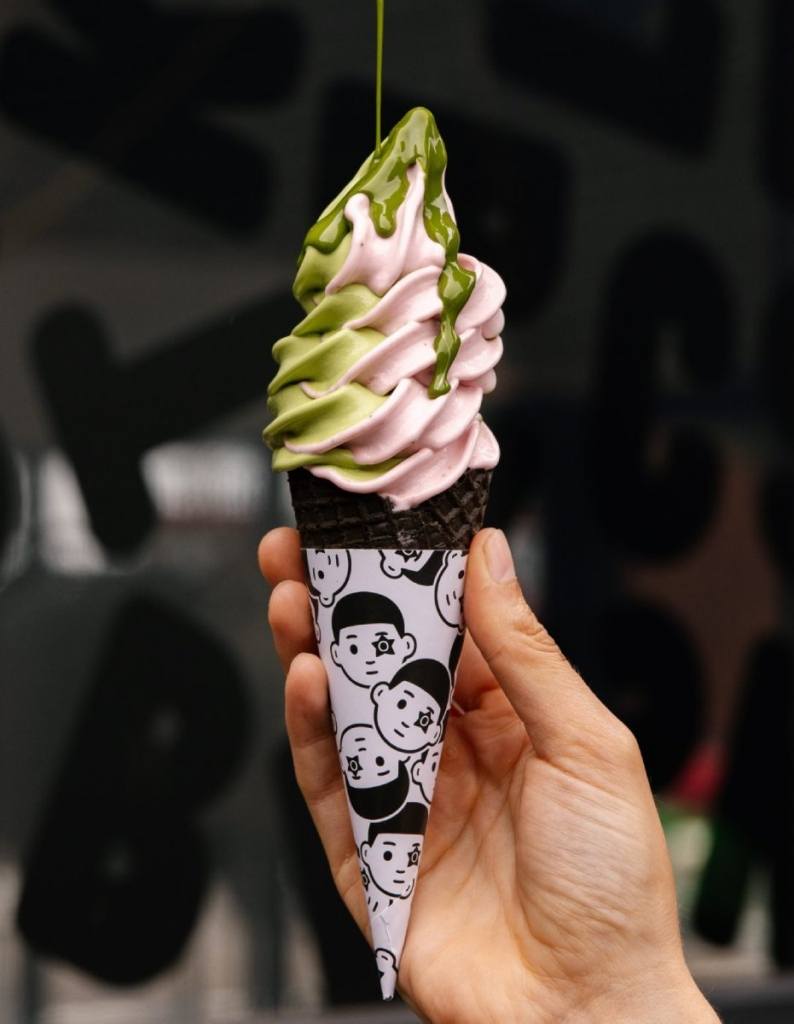
In frozen and dairy formats, the pairing shifts slightly. Cold temperatures soften matcha’s bitterness, allowing it to read smoother and more rounded, while strawberry maintains brightness and lift. That dynamic makes it especially effective in soft serve, yogurt, and parfait-style builds.
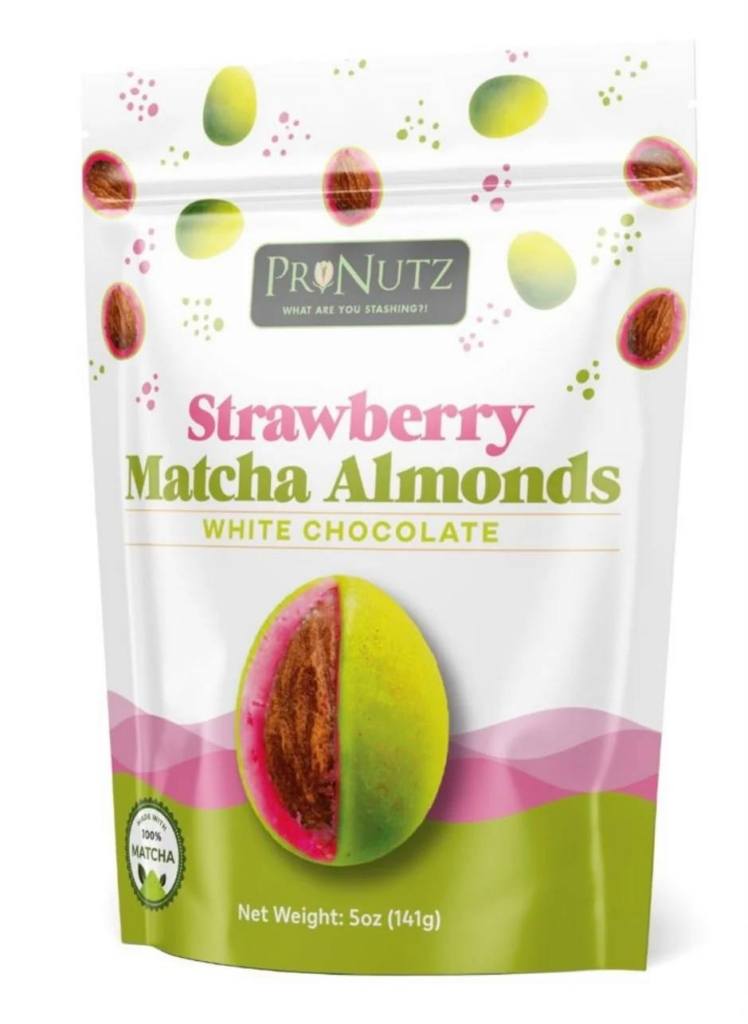
You’re also starting to see early movement in confection and snack formats — chocolate systems, coated nuts, and layered inclusions — where matcha’s affinity for fat and strawberry’s ability to deliver high-impact top notes (particularly in dried or powdered forms) create a balanced, scalable profile.
What ties all of these applications together is structure. Matcha acts as the base — grounding, slightly bitter, and functional. Strawberry sits on top — bright, familiar, and immediately engaging. And between them, sugar, fat, and acid systems do the work of rounding, lifting, and connecting the two. That’s what allows this pairing to move so easily across categories.
It’s not dependent on a single format — it’s built on a system that can be adapted, layered, and reinterpreted depending on the application.
And that’s when a flavor stops behaving like a trend and starts behaving like a tool.
The Takeaway
Matcha didn’t lose its identity as it scaled- it became more versatile.
Strawberry didn’t become more complex- it became more strategic.
This isn’t really about strawberry and matcha.
It’s about a shift toward more intentional flavor construction — where familiar and unfamiliar, indulgent and functional, are no longer opposing ideas, but part of the same system.
And increasingly, that’s what consumers are responding to: flavor that doesn’t force a choice, but instead makes it feel like the right one.