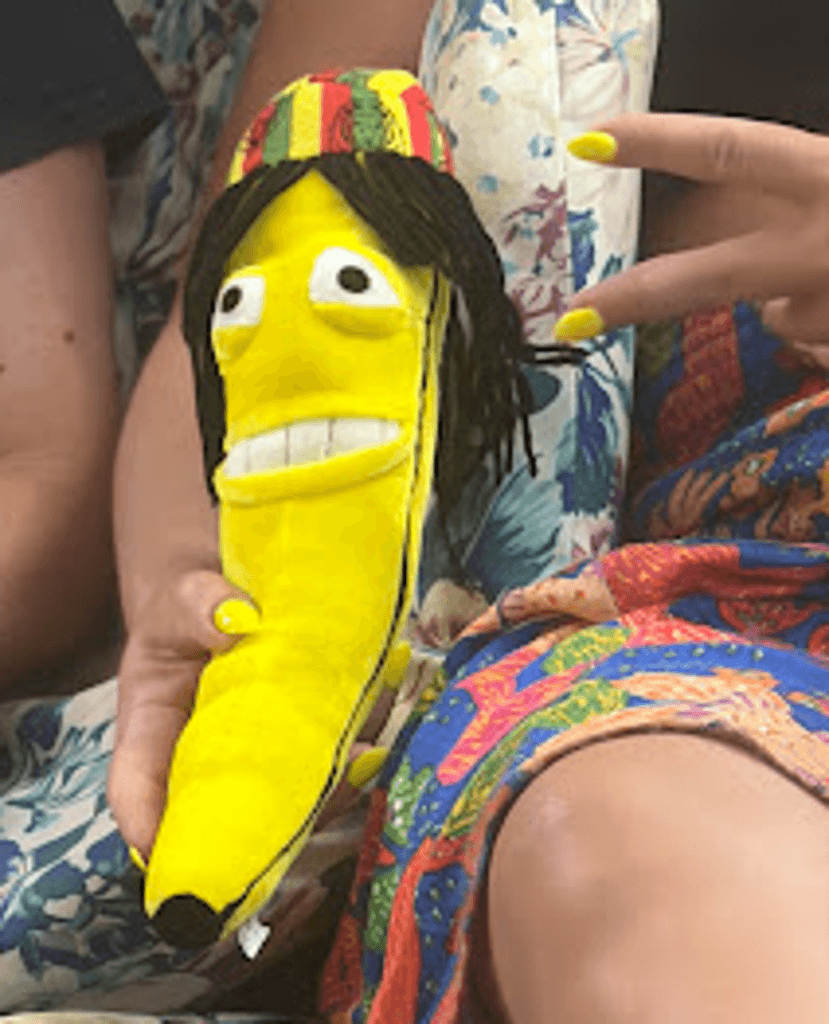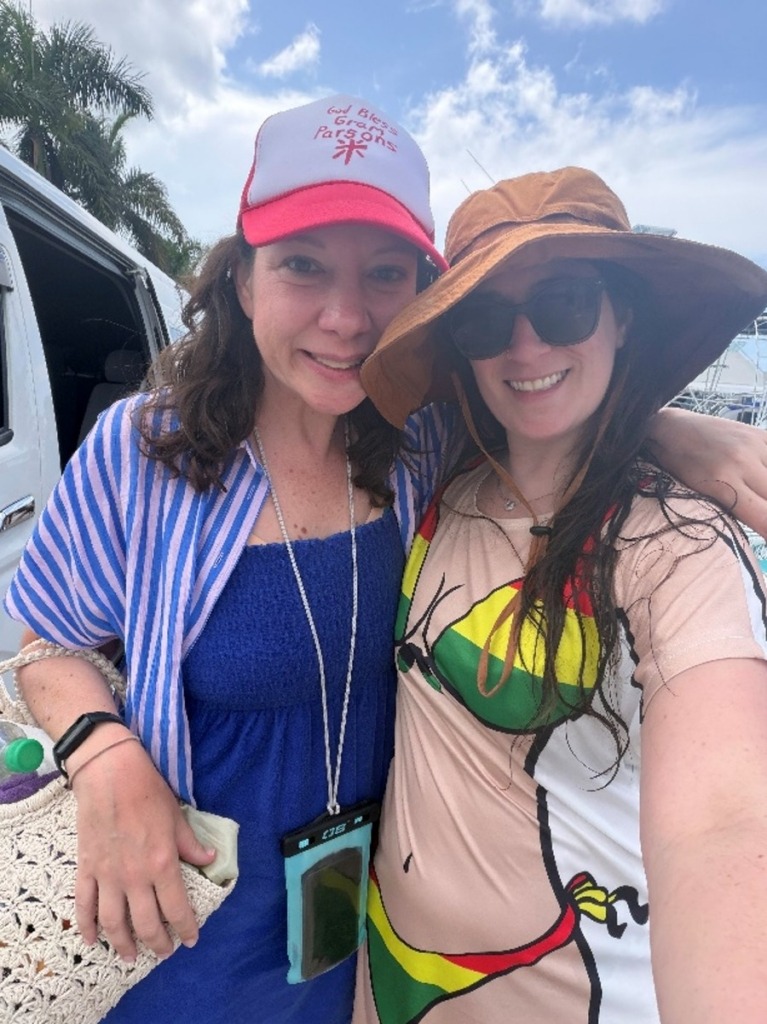
I recently found myself in Trelawny, Jamaica for a friend’s bachelorette party – a trip that somehow involved ten women, face tattoos of the bride, Rasta colored-beverages, questionable maritime expectations, and an elderly carnival Rasta banana named ‘Peeler’ serving as our unofficial mascot.
Naturally, I arrived armed with themed gifts for the group: gloriously tacky Jamaican and Rasta-flag bikini coverups – the kind printed to look like toned abs stretched across oversized white t-shirts. Years ago, the bride and I bought similarly ridiculous versions for a Vegas trip, so it felt only appropriate to expand the chaos.

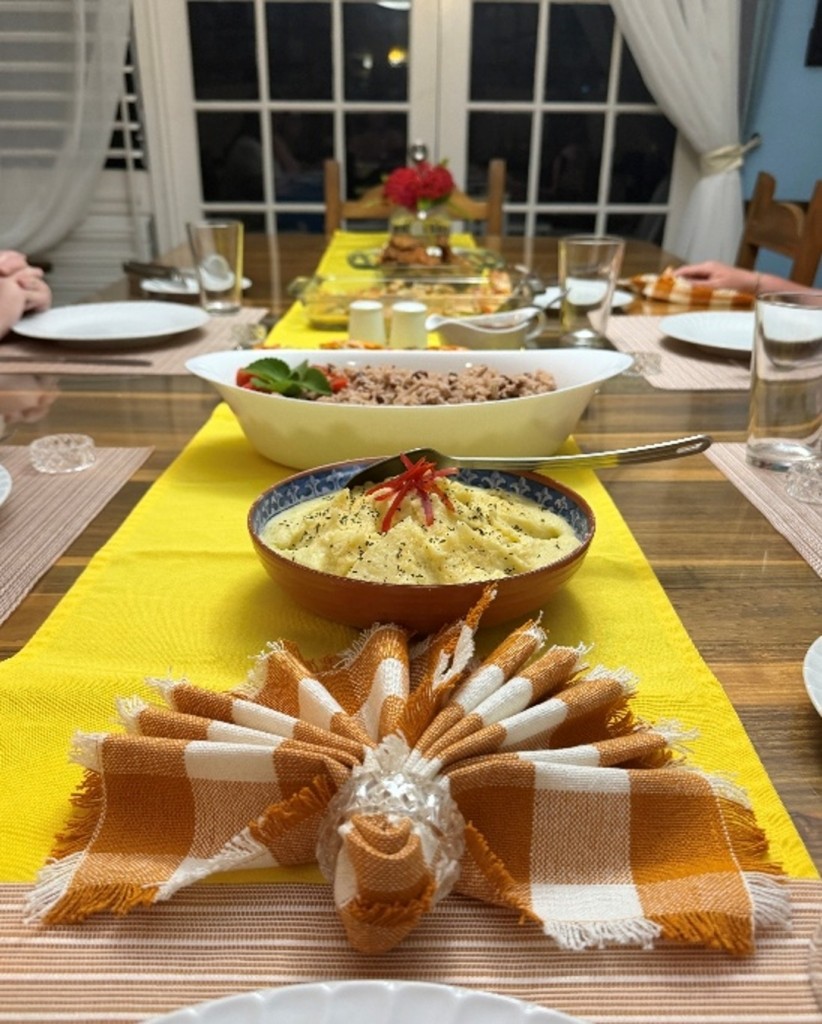
Our remote house came with a chef named Leon, who quickly became less “chef” and more honorary member of the group, spending time as we lazed around the pool and beaches. Ahead of arriving, we had one request: feed us local Jamaican food. All ten of us love a good culinary adventure and wanted the full experience. Leon understood the assignment.
Over the course of the trip, he spoiled us with island classics – jerk chicken, ackee and saltfish, rice and peas, pumpkin rice, oxtail stew, fresh seafood, and dishes that somehow managed to be deeply comforting and explosively flavorful at the same time.
One thing that became increasingly apparent during the trip was how limited and sparse food availability still felt on parts of the island following the hurricane. Leon explained that many banana and plantain trees had been washed away – a meaningful loss on an island where those ingredients are everyday staples for residents and tourists alike. What surprised me even more was learning how much food is imported into Jamaica. Produce, packaged goods, pantry staples – much of it arrives from elsewhere, making grocery prices shockingly high. As a food person who instinctively wanders markets and scans grocery shelves while traveling, it was hard not to notice. There was a real sense of cooking with what the island had, what came in, what was caught that morning, what was growing, and what was actually available that day.
One afternoon, our gardener appeared carrying fresh coconuts. We drank the coconut water, scooped out the soft coconut jelly which surprisingly, several of the women had never tried and quickly discovered the coconuts had surprising range: beverage, snack, smoothie base, and highly effective cocktail mixer.
The fresh fruit itself was ridiculous: sweet, intensely flavorful, and so good it made supermarket fruit feel like it should apologize for existing. Fresh pineapple, papaya, coconut- eaten fresh, blended into smoothies or promoted into tropical cocktail duty later in the day.
The rabbit hole really began after our planned “yacht day” which, in reality was a very old fishing boat with aggressive advertising. Afterward, we asked our driver where we should go for dinner and without hesitation, he recommended a place called Jamindian.
Jam… Indian? That’s precisely where my food-centric tourist brain short-circuited.
Was this fusion? A gimmick? Butter chicken meets jerk seasoning? I immediately opened my phone and began aggressively researching Jamaican food history and what on earth this restaurant might be. Despite my recommendation to seek alternative options, we ventured to the restaurant while I simultaneously began my Google spiral.
As it turns out, Jamaica’s cuisine is a fascinating collision of cultures. African traditions, Indigenous Taíno influence, European colonization, Chinese and Middle Eastern immigration and, importantly, Indian indentured laborers who arrived after emancipation bringing curry traditions, spice blends, legumes, flatbreads, and cooking techniques that gradually intertwined with Jamaican ingredients and cooking styles.
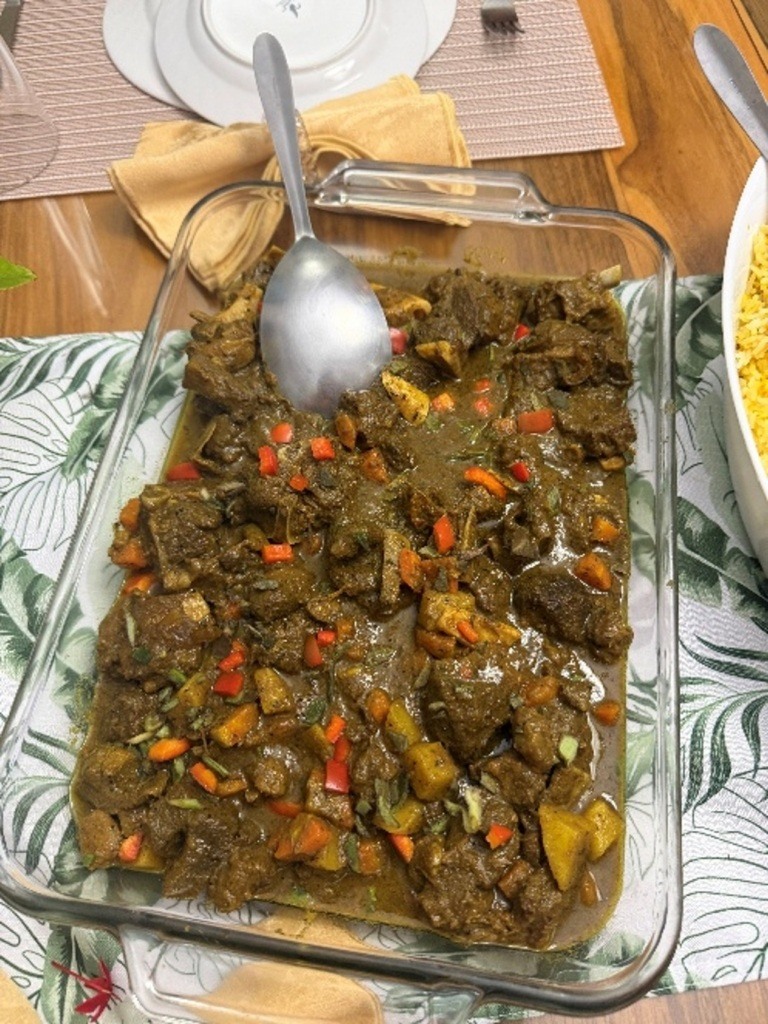
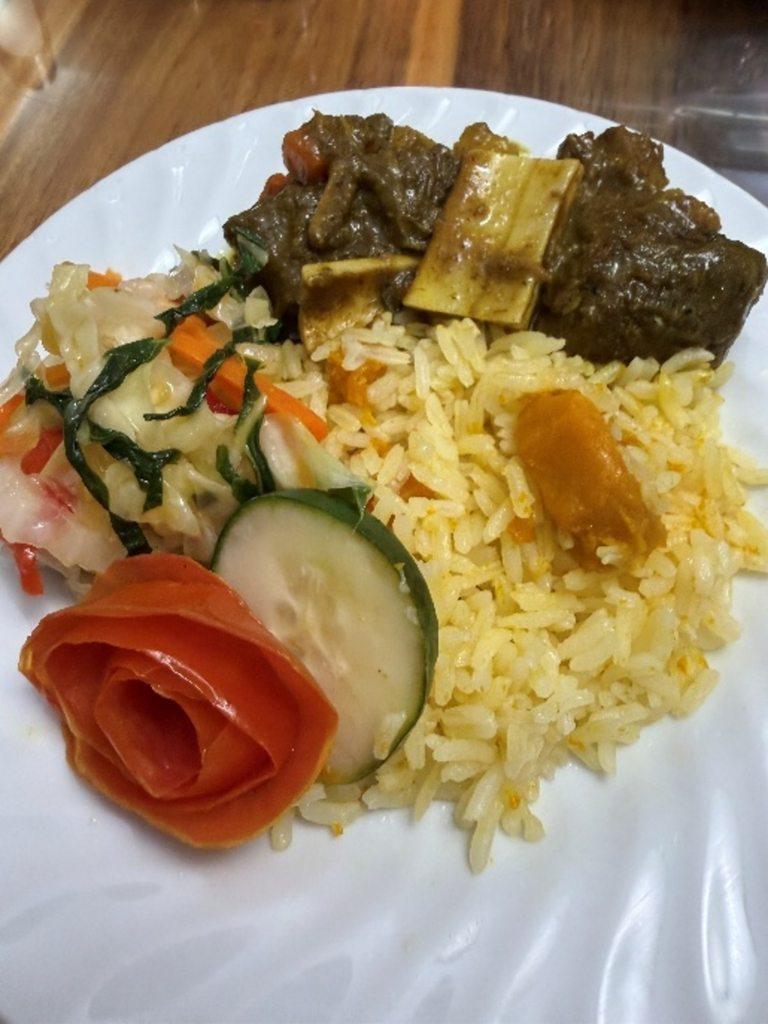
Suddenly, Jamaican curry made a lot more sense. The next day, Leon fed us his curry goat.
Rich, aromatic, warming, deeply savory, layered with spice and slow-cooked depth. The kind of dish that makes you stop talking for a minute because your palate is trying to process what exactly is happening. Except now I wasn’t just eating it, I was indulging it with context.
By this point, I had fully gone down the interwebs rabbit hole and learned that Jamaican curry evolved into something distinctly its own. Jamaican curry powder often leans brighter and heavier on turmeric than many Indian blends, frequently gets “burned” or bloomed in oil at the beginning of cooking, and embraces local ingredients like Scotch bonnet, thyme, scallion, garlic, and allspice.
It wasn’t Indian curry transported to Jamaica. It was Jamaican cuisine doing what Jamaican cuisine seems to do extraordinarily well: taking influences from around the world and turning them into something unmistakably Jamaican.
Leon casually mentioned one day that the fishermen head out each morning and sell their catch down by the wharf, conveniently located about a ten-minute walk down the beach from our house. Naturally, this sounded exactly like the kind of side quest I live for and allowed the sun to wake me up early and began my journey to investigate the catch of the day.
Sadly, it wasn’t a particularly abundant haul, but I returned carrying a couple jack fish, a few small snappers, a rainbow fish, and a few others which Leon turned into dinner.
The snapper and smaller fish found their way into a fragrant coconut Scotch bonnet broth, while the jack fish became classic escovitch: bright, tangy, spicy, and vinegary. Which, naturally, sent me down yet another culinary rabbit hole, because even escovitch has a story.
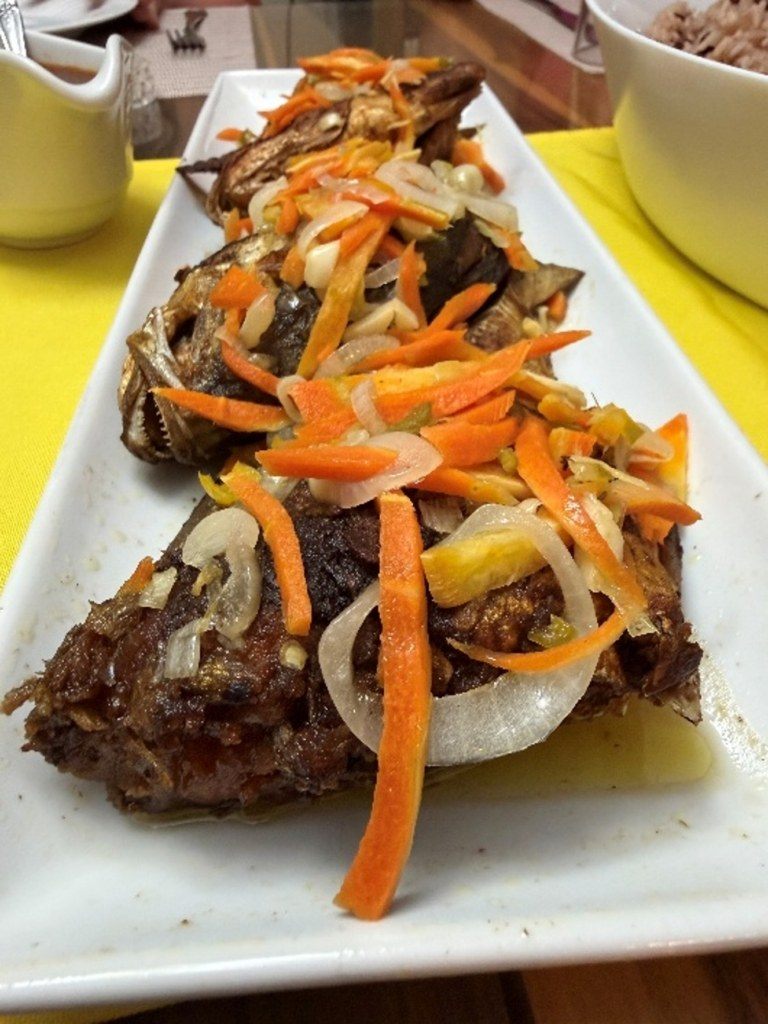
The dish traces back to the Spanish escabeche– fish preserved in an acidic marinade, which Jamaica adapted into its own vibrant version layered with peppers, onions, carrots, vinegar, and a sprinkle of love. By this point, I realized Jamaican cuisine wasn’t just “great vacation food.” It was a living history lesson hiding inside remarkably delicious, shared meals.
Ackee, Jamaica’s national fruit, traces back to West Africa. Breadfruit arrived through colonial trade routes. Saltfish traveled across the Atlantic economy. Curry came through Indian migration. Jerk itself is rooted in Indigenous Taíno cooking techniques later shaped by African Maroon traditions. Somehow, all of these influences collided on one island and evolved into a cuisine that feels entirely and unmistakably Jamaican.
It was realizing that Jamaican cuisine isn’t a collection of standalone dishes – it’s a story of migration, resilience, adaptation, and remarkable flavor. Shaped over generations by countless cultural influences, it has become something bold, layered, comforting, fiery, and entirely its own.
Also, for the record, Peeler survived the journey, outlived the yacht day expectations, and saw more culinary anthropology than anyone reasonably expects from an elderly carnival banana.

Jessica